Bagua

Bagua
Showing posts with label moving lines. Show all posts

Saturday, August 22, 2020

I Ching Questions and Answers: Line 1 and Line 6

 I often receive questions about the I Ching, and how to read it more effectively. If you have a question post it in the comments below and I will try to answer it.


Meanwhile, here is one example of a question someone recently sent me, and my answer:


Q: what does it mean when only line 1 and line 6 are changing?


In an I Ching casting, you derive a six-line hexagram. In the casting, any number of those lines, from none at all to all six, could theoretically be changing lines. 

Any lines might or might not be changing. 

You cast the lines in order from the bottom to the top, so that the bottom line is considered "line 1", and the top line is considered "line 6".
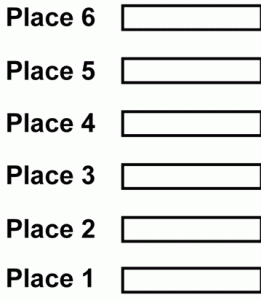


If more than one line is changing, it is important to determine what is the "central line", the part of the casting that is the most important. The way to do this is explained in The Magician's I Ching.

So if you get only two changing lines, and they are line 1 and line 6, of the two the central line of the reading is line 6. Line 1 needs to be read as a kind of prelude to the central line 6.
 

In an I Ching casting the position of each line has a general sense of importance. As each Hexagram represents a situation, the bottom 1st line represents the very beginning of the situation; often even what happens before the situation is really in action. Line two is often when things get going. Line three the most difficult part (the jump between the lower lines and the upper lines). Line four is when you're past the middle of the situation. Line 5 is usually the climax or peak of the situation, and Line 6 is when the situation is ending or even past due to end.

Since Line 1 usually signifies something taking place very early, and line 6 very late, there is a bigger distance between the two than if they were any other two lines. It can also mean with regard to the question that issues that happened at the beginning of the process are relevant to what is happening right now.

So in a casting where Line 1 and Line 6 are the two changing lines, you ought to think of Line 6 as what's most central right now, but there are things about how the current situation began that are having an important effect or consequence at the time of the situation ending.


Thursday, October 8, 2015

How to Interpret an I Ching Casting: Part 2

In I Ching tradition, the number of changing lines you have affects what should be read, and allows you to determine which particular part of the overall reading represents the “centre”, that part of the casting that marks the present or the most urgent thing to attend to (with all that comes before that “centre” being previous developments, and all that comes after being later developments).

In the reading, if you have: Then read:
-No Moving Lines: then read the Main Hexagram Text only.
-1 Moving Line: then read the Main Hexagram Text, the Moving Line, and the Future Hexagram Text, and the Moving Line is the “centre”.
-2 Moving Lines: then read the Main Hexagram Text, both Moving Lines, and the Future Hexagram Text; and the UPPER Moving Line is the “centre”.
-3 Moving Lines: then read the Main Hexagram Text, all three Moving Lines, and the Future Hexagram Text; and the MIDDLE Moving Line is the “centre”.
-4 Moving Lines: then read the Main Hexagram Text, the four Moving Lines, the Future Hexagram Text and the two lines from the Future Hexagram that were unmoving (for example, if you get a hexagram with lines 1-4 moving; then you will read lines 5 and 6 of the Future Hexagram). Of these, the LOWER Future Hexagram Line is the “centre”.
-5 Moving Lines: then read the Main Hexagram Text, all five Moving Lines, the Future Hexagram Text, and the unmoving Future Hexagram Line; and the single unmoving Future Hexagram Line is the “centre”.
6 Moving Lines: then read the Main Hexagram Text, all six Moving Lines, and the Future Hexagram Text; and the Future Hexagram Text is the “centre”.

Naturally, all of the above describes the basic way you would read an I Ching casting, and it is how you begin. However, as you develop there are other aspects you are doing to want to look at, but it is not good to overburden yourself at the beginning. Make certain that you have a firm grasp of the fundamental method before delving into other details. Later on, you may want to look at and contemplate the structure of the hexagrams you cast: look at the lines, which line is where, understand why that makes certain things good or bad. Look at and contemplate the image evoked by the component trigrams (both the “official” one described in the book and other ways you could imagine those two elements combining to create an image). You will also want to look at the Nuclear Hexagrams involved, as well as the opposite, overturned and reversed hexagrams; there may be more information on this later.

If you want more information and guidance to performing an I Ching casting, please consider purchasing the book "The Magician's I Ching".