Bagua

Bagua
Showing posts with label timing. Show all posts

Saturday, August 22, 2020

I Ching Questions and Answers: Line 1 and Line 6

 I often receive questions about the I Ching, and how to read it more effectively. If you have a question post it in the comments below and I will try to answer it.


Meanwhile, here is one example of a question someone recently sent me, and my answer:


Q: what does it mean when only line 1 and line 6 are changing?


In an I Ching casting, you derive a six-line hexagram. In the casting, any number of those lines, from none at all to all six, could theoretically be changing lines. 

Any lines might or might not be changing. 

You cast the lines in order from the bottom to the top, so that the bottom line is considered "line 1", and the top line is considered "line 6".
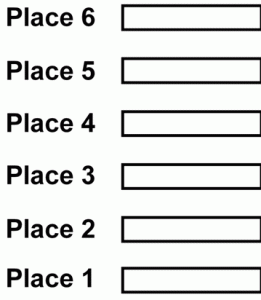


If more than one line is changing, it is important to determine what is the "central line", the part of the casting that is the most important. The way to do this is explained in The Magician's I Ching.

So if you get only two changing lines, and they are line 1 and line 6, of the two the central line of the reading is line 6. Line 1 needs to be read as a kind of prelude to the central line 6.
 

In an I Ching casting the position of each line has a general sense of importance. As each Hexagram represents a situation, the bottom 1st line represents the very beginning of the situation; often even what happens before the situation is really in action. Line two is often when things get going. Line three the most difficult part (the jump between the lower lines and the upper lines). Line four is when you're past the middle of the situation. Line 5 is usually the climax or peak of the situation, and Line 6 is when the situation is ending or even past due to end.

Since Line 1 usually signifies something taking place very early, and line 6 very late, there is a bigger distance between the two than if they were any other two lines. It can also mean with regard to the question that issues that happened at the beginning of the process are relevant to what is happening right now.

So in a casting where Line 1 and Line 6 are the two changing lines, you ought to think of Line 6 as what's most central right now, but there are things about how the current situation began that are having an important effect or consequence at the time of the situation ending.


Monday, December 7, 2015

The Curriculum of the Yi Fa Society, Level 2

Each level of the Yi Fa Society has its own curriculum, with new material presented for the student's growth, practice and study.  A previous entry already detailed the Curriculum of Level 1.

The Curriculum of Level 2, in brief, consists of the following points:

1. The Level 2 Yi Fa Qi Gong exercise. This is a secret exercise taught only to members of level 2 of the Yi Fa Society program.

2. "Transforming the Inferior Person": a contemplative practice, used by a level 2 student to address those parts of their persona that act as barriers to the Superior Individual, to re-integrate them and remove them as barriers.

3. The Universal Yi Fa Qi Gong: a 50 page secret text that acts as a guide to the theory and study of Yi Fa Qi Gong.

4. "The Three Offerings": devotional practice/ritual to further the development of Union.

5. Secret Techniques of the I Ching: secret methods to determine further insights into I Ching castings, including understanding the origins and further developments of aspects of the present casting, alternate resulting hexagrams, and concepts of Timing to determine duration of casting effects.

6. The Yi Dao: a 22 page text of commentaries on the study of the I Ching.


These advanced teachings are only available to those students who are members of the Yi Fa Society and complete the Level 1 curriculum.

If you are interested in membership in the Yi Fa Society, please contact me!


Wednesday, October 21, 2015

Determining the "Present" in an I Ching Casting

An excerpt from The Magician's I Ching:

In I Ching tradition, the number of changing lines you have affects what should be read.  Depending on the number of changing lines, the "present" or "central incipiency" of a casting varies.  Everything that comes before that "present" is a reflection of previous developments (that are still influencing the present moment), and everything that comes after are "incipiencies" that have not yet manifested, that is, later developments.


Determine the changing lines you have:


-No Changing Lines:  the Main Hexagram Text is central, and should be the only part read.

-1 Changing Line: the single changing line is the "present".  The Main text and the main text of the resulting hexagram are broad themes of the prior and later developments.

-2 Changing Lines: the UPPER of the two changing lines is the "present".


-3 Changing Lines: the MIDDLE changing line is the "present".

-4 Changing Lines: in this case you should read the main text of the hexagram, the four changing lines of that hexagram AND the two unchanging lines of the resulting hexagram (so if you have a hexagram with lines 1-4 being 'changing lines'; you should read those four, plus lines 5 and 6 of the new hexagram).  Of these, the LOWER of the two resulting hexagram lines is the "present".


-5 Changing Lines: As above, read the main text, all 5 changing lines, and the single line of the resulting hexagram that was not changed.  The single unchanging line from the resulting hexagram is the "present".

-6 Changing lines: read the main text, all six moving lines, and the resulting text.  The resulting hexagram text is the "present".