In this latest video, I give you some guidelines as to how you should study the text and structure of the I Ching to maximize your ability to understand it!
Bagua

Tuesday, October 13, 2020

Tuesday, September 22, 2020
The Magician's I Ching Facebook Group now has Over 3000 Members!
The Facebook group created in honor of The Magician's I Ching, but which is a general discussion group for all I Ching related subjects, has now reached 3000 members!

So if you haven't already joined the Magician's I Ching Facebook Group, please consider joining! It's free, and filled with interesting conversation and material related to the I Ching and I Ching studies. It's open to people coming from western or eastern traditions. It's very welcoming to newcomers to the I Ching, and you can get questions answered or useful advice. But it also has many very learned and highly experienced advanced students of the I Ching, and if you are one of those people you'll find some excellent higher level discussion about some of the finer points of I Ching study.
While you're at it, please consider joining the Yi Fa Society. Members of the Yi Fa Society also have a (secret) discussion group, and benefit from a complete and detailed training program for studying Yi Fa Qi Gong and the I Ching. Members of the Yi Fa Society are taught additional Qi Gong and I Ching secrets that are not available anywhere public.
At higher levels of membership, the advanced exercises of Yi Fa Qi Gong are taught, and students are provided large numbers of instructional materials (whole books, like "Secret Techniques of the I Ching", "Universal Yi Fa", "The Yi Dao", and "the Great Book of Yi Fa", among others) on how to deepen their work with Qi Gong and I Ching for self-transformation and the work of enlightenment.
Members of the Yi Fa Society can work personally with me to keep up their practice, to resolve problems in their practice, and to develop discipline and structure in their spiritual path. Members also have the opportunity to have monthly Skype meetings with me for the same purpose.
Yi Fa Society membership is not free, but basic membership is on a monthly donation basis set by each student.
If you are interested in joining the Magician's I Ching Facebook group, just click on the link and join, and start reading and sharing with us!
If you are interested in joining the Yi Fa Society, please contact me, here or on Facebook.
Saturday, August 22, 2020
I Ching Questions and Answers: Line 1 and Line 6
I often receive questions about the I Ching, and how to read it more effectively. If you have a question post it in the comments below and I will try to answer it.
Meanwhile, here is one example of a question someone recently sent me, and my answer:
Q: what does it mean when only line 1 and line 6 are changing?
In an I Ching casting, you derive a six-line hexagram. In the casting, any number of those lines, from none at all to all six, could theoretically be changing lines.
Any lines might or might not be changing.
You cast the lines in order from the bottom to the top, so that the bottom line is considered "line 1", and the top line is considered "line 6".
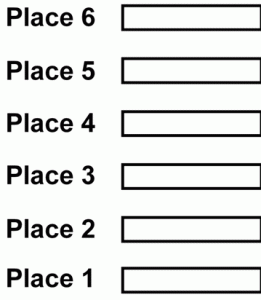
If more than one line is changing, it is important to determine what is the "central line", the part of the casting that is the most important. The way to do this is explained in The Magician's I Ching.
So if you get only two changing lines, and they are line 1 and line 6, of the two the central line of the reading is line 6. Line 1 needs to be read as a kind of prelude to the central line 6.
In an I Ching casting the position of each line has a general sense of importance. As each Hexagram represents a situation, the bottom 1st line represents the very beginning of the situation; often even what happens before the situation is really in action. Line two is often when things get going. Line three the most difficult part (the jump between the lower lines and the upper lines). Line four is when you're past the middle of the situation. Line 5 is usually the climax or peak of the situation, and Line 6 is when the situation is ending or even past due to end.
Since Line 1 usually signifies something taking place very early, and line 6 very late, there is a bigger distance between the two than if they were any other two lines. It can also mean with regard to the question that issues that happened at the beginning of the process are relevant to what is happening right now.
So in a casting where Line 1 and Line 6 are the two changing lines, you ought to think of Line 6 as what's most central right now, but there are things about how the current situation began that are having an important effect or consequence at the time of the situation ending.
Wednesday, July 15, 2020
Spiritual Cultivation is Not Just "Follow Your Passion"
One of my students had a question regarding a new-age author who suggested the following advice, not uncommon in our modern culture:
"He says that if in your work you are being distracted with something else, then maybe you should do what you are being distracted with, i.e. follow your passion. Which is common sense of course."
Note that this was even noted as "common sense".

But in fact, this is terribly bad advice to give people; as 'distraction' and 'passion' are not the same thing.
Most people don't have any idea what their passion is.
If they do know, and follow it, they will find that there are all kinds of "distractions" that try to drive them AWAY from those passions, because it turns out that following one's passion requires enormous discipline and very hard and often boring work and many sacrifices and lots of other things that aren't fun.
And your passion requires CHANGE.
It requires that you be almost a completely different person when you come out of the process than when you started, and if you are not willing to make that kind of change, the no-longer-being your existing conception of self, then many of the 'distractions' are likely to be things that are also tempting to you precisely in order to try to get you to keep being who you are right now.
They're saying "look, you find this really interesting, right? Come follow this wild goose chase of things you find interesting instead of that one really hard thing you're trying to do".
And before you know it, years have gone by and you've started ten thousand things and finished none of them.
You need to find out what you actually love (as in, what is your actual will), not the lies that you tell yourself about the type of person you'd like to be because you hope other people will see you that way, or because someone else told you its what you have to be like, but what you are actually want to accomplish, above all else. As precisely as possible.
And then you have to follow that thing you love no matter how hard it is or how much struggle and suffering and sacrifice you go through in it, until it kills you.
Monday, June 22, 2020
The I Ching: Hexagram 15 - Humility
An analysis of the 15th hexagram of the I Ching, in the latest video in the I Ching series:
If you want more teachings on the deeper mysteries of the I Ching, as part of a program of cultivation and spiritual self-development including meditation and Qi Gong practices, please consider applying to the Yi Fa Society!
If you want more teachings on the deeper mysteries of the I Ching, as part of a program of cultivation and spiritual self-development including meditation and Qi Gong practices, please consider applying to the Yi Fa Society!
Thursday, May 21, 2020
Why Do People Hide In Their Own Fake Realities?
Q: why do people try to stay in the center of their own little universes?
We stay in little universes, that we can pretend we're in the center of. At first glance, this might seem to be a way to get something, to gain some fantasies we have. But it's more about trying not to lose.
We fear being vulnerable, so we shut ourselves up in our own little universes, separating ourselves from reality, as a way to create the illusion of greater control in our lives. If we can be at the center of things that means that we are in control and can avoid dangers and can justify anything we do; of course that's all just delusion, but that's how we imagine it'll work. Instead of accomplishing what you want it to, you become trapped in your own tiny box.

Making yourself NOT the center of your own universe means Losing Control, and having to trust: first of all, to trust yourself, that you won't fail without total control. Most people don't believe in their own abilities, so they create this tiny little box-world where they can feel like the big fish of it (what Reich called the "little man").
Second, trust other people.
And third, trust reality itself.
And those are very hard because what we want is not to be harmed and of course all those things WILL harm us. We will fail (sometimes), we will be hurt by people (sometimes) and life will definitely kill us, eventually.
But the expansion of our fears of those things happening, our failure to go ahead and trust anyways and therefore have a chance of creating purpose for our lives, leads us instead to hide away in that fantasy of self-referencing where ultimately all the things we fear will happen anyways, and on top of that we will have failed to have purpose.
And absolutely, through cultivating Virtue, we grow to understand the pointlessness of trying to put ourselves in the center of our own little universe instead of diving into our corner of the great big one and getting to be one precious part of that.
Thursday, May 14, 2020
"Positive Affirmations" are the Opposite of Real Spiritual Positivity
In this video, I talk about how the notion of trying to force the Tao to give you what you think you desire or magically make you who you imagine you want to be is not real "positive affirmation", but the opposite of true positive spiritual perspective!
Subscribe to:
Posts (Atom)