Bagua

Bagua

Sunday, March 21, 2021

Can Qi Really go "Stale"?


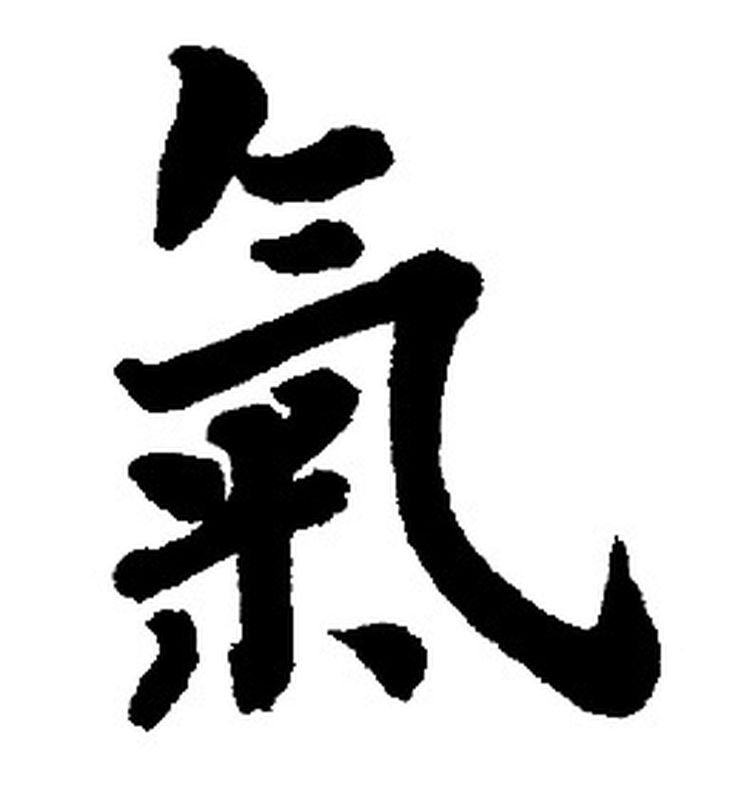
Qi is really just Qi. But at times it is useful in speaking about Qi, in the context of things like Qi Gong, cultivation practice, esoteric studies or traditional healing to describe particular interactions of Qi with our body or our consciousness through the use of metaphorical conditions. However, this has led over the  years to different systems or teachings in esoteric schools to end up using a variety of terms, like "positive qi", "negative qi", "Yin Qi" or "Yang Qi", "Natal Qi", "Active Qi" or "Stale Qi"; but all of these gradually came to be thought of as different "types" of Qi, which is inaccurate. 


As an example, let's consider the example of "stale Qi":

 There are two ways to understand Qi in any way that Qi could be said to be 'stale'. The term is a deceptive because it implies that it is the Qi that is bad or corrupted or in some sense different from normal Qi.

The first is in the sense of physical well-being, where if someone has failed to be natural for a long time, developing harmful physical habits that lead to physical tension, a failure to breathe naturally, tightness/restriction of the body in varied ways, then the circulation of Qi through the body is not open and fluid, and so Qi will tend to accumulate only in certain areas of the body and not others, leading to physical disharmony. Notice that it is not in fact a problem with Qi, or that Qi is any different, it is a problem with the body and its ability to be open and receptive and fluid in relation to Qi.

The second is in the sense of understanding Qi not only as life-force but as Will. Our will is directed to certain things. We put our will into certain things. This includes things that must be done in the immediate sense, like very ordinary things, and also things that we are trying to achieve in a bigger sense, but it also means anything we've intentionally or unintentionally invested ourselves in. This investment means that some of our will, our Qi, will be directed in certain ways, and normally this isn't a problem, it's perfectly normal.  But if we have invested our will into things that we cannot resolve, into things that are unreal, or things that are no longer real, our attention and our emotions (fear or desire) and our mind and our pain clinging to those things in spite of their unreality, then the Qi gets locked in to being invested in that. Part of our will is stuck there. 

That manifests also in the body, as tension (tension here meaning anything from physical rigidity to posture, to breathing, to other symptoms like sleeplessness or intestinal troubles, to serious disease). The Qi there is 'stale' because it is stuck clinging to something unresolved and that cannot ever be resolved in the usual way. Once again note that the problem is not with Qi, or that the Qi is different, but rather a problem that our mind is locking-in our Qi, limiting its fluidity because of our obsessions.

So the ways to resolve these sorts of problem are either by physical practice (Qi breathing) or by Virtue (through self-inquiry). The former uses the body to loosen the bonds of the mind, the latter uses awareness to loosen these bonds. Typically, a combination of both is best.

Sunday, March 7, 2021

Psychedelics and Spiritual Cultivation


I have often been asked whether there is any utility or value in the use of psychedelic drugs while engaging in spiritual practices, and specifically cultivation practice like that found in Yi Fa Qi Gong and other authentic Qi Gong cultivation systems.

 My answer has always been that one has to be very cautious and prudent in how to approach the question of psychedelics. And in fact, people who are already engaging in or have previously used psychedelics will probably have very little benefit, and potentially drawbacks, from any attempt to use them in the context of cultivation practice.

Not because "drugs are bad" or anything like that, but because in the context of just WHAT they're useful for in terms of spiritual development.  Psychedelic drugs need to be used ideally only at very carefully selected moments and in very specially selected contexts. The ancient shamanic cultures throughout the world understood this, as did some of the hermetics and some of the eastern sects.

The central feature of the psychedelic experience is twofold: it temporarily breaks down the ego, and it opens the doors of perception (to paraphrase Huxley).

The latter means that suddenly you're having a sensory experience different to anything you experienced before.


This is what leads to the effect of breaking down the ego: the mind's ability to lock-in to personality is based largely on imprinted behaviors from memory... what you could call "conditioning". Basically, ways you've programmed yourself, some of which is essential for daily living but a lot of which is also highly limiting, including in the spiritual context.

When you use a psychedelic for the first time, it makes your brain unable to refer back to any past experience that was sufficiently similar to allow the ego to assert itself (in the sense of "I know what's happening here, I know what to do") and so you have the potential to have an experience that can break some barriers the Ego has created that could be very hard to break otherwise. It is the inability to put what you're experiencing into some comfortable box of context that makes the experience so potentially charged with the opportunity to make serious Change.

But by the second time you use a psychedelic, you already have a context by which the brain can compare it to in memory; namely, the first time you used it! So even just the second use of a psychedelic will be, spiritually speaking, enormously less useful than the first time.

I would say that generally speaking, the real spiritual utility of psychedelics for transformation (in cultivation practice) is limited to the first two or at most three times you use a drug. Any use after that will, at best, only be useful for attaining a kind of trance state (but that can be done in a lot of ways, including meditation). It's no longer useful as an ego-overwhelming tool. It is just re-creating a former experience.

That means that if you had wasted the first time you used a psychedelic (say, at a party or something), you would wasted a big potential tool that you could never use again.

So you want to think carefully about when you use psychedelics. If you do use them, it should be at a carefully planned moment and in a carefully prepared context so as to make the best use of the power of the ego-overwhelming experience.
 

Friday, January 22, 2021

I Ching Hexagram Commentary #16 - Certainty

 Here is the latest in the I Ching public video series. 


Members of the Yi Fa Society get access to private videos and written teachings that elaborate further on each hexagram covered in this series. If you are interested in applying to the Yi Fa Society please get in touch.


Monday, January 4, 2021

On the Significance of Yuan Heng Li Zhen

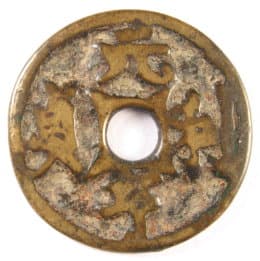
 The opening words of the I Ching's core text are "Yuan Heng Li Zhen", which is typically translated as "Sublime celestial forces in motion". 

When you think of the "celestial force" that is Time itself, you can understand immediately that this first line, the main text description of Hexagram #1, is also an apt description of what the entire I Ching is all about, and it has been treated that way by many scholars and adepts of the I Ching throughout history. As more commentary has been made of Hexagrams 1 & 2 than any of the others, it can also be said that more commentary has been made on those four words than any other words in the entire I Ching.

 These words do not appear on in Hexagram 1, however. They are also spread out, often in pairs (Yuan heng, or li zhen) throughout the I Ching core text.  Separately, "Yuan heng" means a broad or easy path, or also, a ritual or sacrificial rite. While "Li zhen" means a favorable auspice, clearly a common phrase in the context of divination. 


A Chinese coin-shaped talisman inscribed with Yuan Heng Li Zhen


In the Yi Fa teaching, a great deal of emphasis is put on those words as representative of the four facets of Virtue: Union/Love, Discipline, Justness/Harmony, and Truth/Reality. 

The description of Yuan Heng Li Zhen as being these four virtue facets originates with the Wenyan Commentary, which dates back to before the Han Dynasty. Here is a quote of that commentary from one translation:

 "What is called "the great and originating" (yuan 元) is [in man] the first and chief quality of goodness; what is called "the penetrating" (heng 亨) is the assemblage of excellences; what is called "the advantageous" (li 利) is the harmony of all that is right; and what is called "the correct and firm" (zhen 貞) is the faculty of action."

Here "goodness" is Love/Union, "the Assemblage of excellences" is the process of Discipline, Li is already translated here as Harmony, and the "Faculty of Action" is Truth or Reality, that is to say the perceptual faculty that allows us to take action.

Yuan Heng Li Zhen is also a reference to cycles:

Yuan - sublime, the head. The beginning. Spring
Heng accomplishment, prosperous. Summer
Li beneficence, harvest, autumn.
Zhen determination, endurance, winter

Thus Yuan symbolizes the beginning of all things, Heng their growth, Li their further development, and Zhen their maturity.  This concept of the four words connecting to the cycles of growth and the four seasons was particularly elaborated by Cheng Yi, the Song dynasty sage and friend of Shao Yong. 


These words are also used in some esoteric contexts as a mantra, and also as words of invocation for ritual purposes. In fact, just as the four words can be used to describe the pattern or process of natural or seasonal cycles, they can also be used to describe the STEPS of a ritual.

In this sense, "Yuan" symbolizes the invocation, calling down what is above, for the sake of Union.

"Heng" symbolizes the correct performance of the ritual, with Discipline.

"Li" means receiving a response from the forces you have called upon; that is to say, your ritual bringing you into Harmony with the universe.

And "Zhen" means applying that response or change in yourself, embodying Truth in the real world.


Friday, December 11, 2020

What Does Active Consciousness Feel Like?

In Yi Fa Qi Gong, a great emphasis is placed on being in the Active Consciousness. What this means is that while you're doing the exercises it is very important to be present, to "Show Up" to the practice; to be situated in your body and in the moment, attentive to what you are doing. You can't be distracted in your mind; and to avoid this you must pay attention to the sense of your body.

 But some students have asked what this experience feels like; how one can know what the Active Consciousness is like?


When you're REALLY in the "zone" of the Active Consciousness you will feel like you're completely present, sort of like you're right at the front of your body. 

Your breathing will be Qi Breathing, effortlessly centered in the lower dantien point (the spot just below your belly button), and you'll be experiencing the whole of your body as one whole thing. 


You will feel much more solid and real than usual.  You will not be in the head, though you'll still hear your thoughts, they won't feel like where you are and what you're doing, they'll feel like something in the background, like it was a radio playing on a shelf behind you.

You will feel very powerful and your practices will feel very powerful and intuitive.

 These are the signs that you are effectively present in the Active Consciousness.

Friday, November 13, 2020

What is the Nature of the Superior Individual?

In the philosophy of the I Ching,  there is a basic truth that in every moment, we have a choice between manifesting the Superior Individual or the inferior person. 

Among those who practice cultivation, however, there may be some question as to just what the "Superior Individual" is.  In the course of cultivation, one might get a sense of the Superior Individual being some outside entity, the "higher self" sending them messages or guiding their life. 

So some have developed a conception where the Superior Individual is some kind of outside spiritual, angelic or divine entity.

But in fact, the Superior Individual is basic part of ourselves. It is not a separate being at all, it is us. The best of us. 

 This sense of differentness, of the Superior Individual seeming like another being with its own intelligence and communicating with us is a product of people's primary identification with the 'inferior person', which is also a part of us. Thus, we have become separate from the 'higher self'.


Why are we separated from our higher self?

We aren't, but it seems this way.

The issue is this: we are a species in the process of evolution. Our consciousness has multiple layers, which can be generally divided into two parts. In the context of I Ching studies (including the Yi Fa work) these are described as "World" and "Heaven". To Nietzche it was "last man" and "super-man". In others, it could be called "animal" and "divine".


The Chinese actually say that there are two parts to the human soul: Po and Hung. The Po is the part of us that is animal instinct plus conditioned behavior. The Hung is the part of us that is our fullest potential and true Individuality (as opposed to the 'persona' of our inferior po-soul).

We can, at every moment, choose to associate with one or the other. But on account of our intermediary condition and because of our social conditioning we tend to more directly identify ourselves as the "Inferior Person". So much so, that the Superior Individual can sometimes feel like it's a separate entity, some kind of guiding spirit.

You will find, if you engage with discipline in a sincere long-term course of spiritual cultivation, that over time, you will become more and more identified as one with the Superior Individual. At that point, the 'ideas' of the Superior Individual will be identical to your own, and the notions of the inferior person, which will still be present, will instead be the ones that appear to be foreign.